

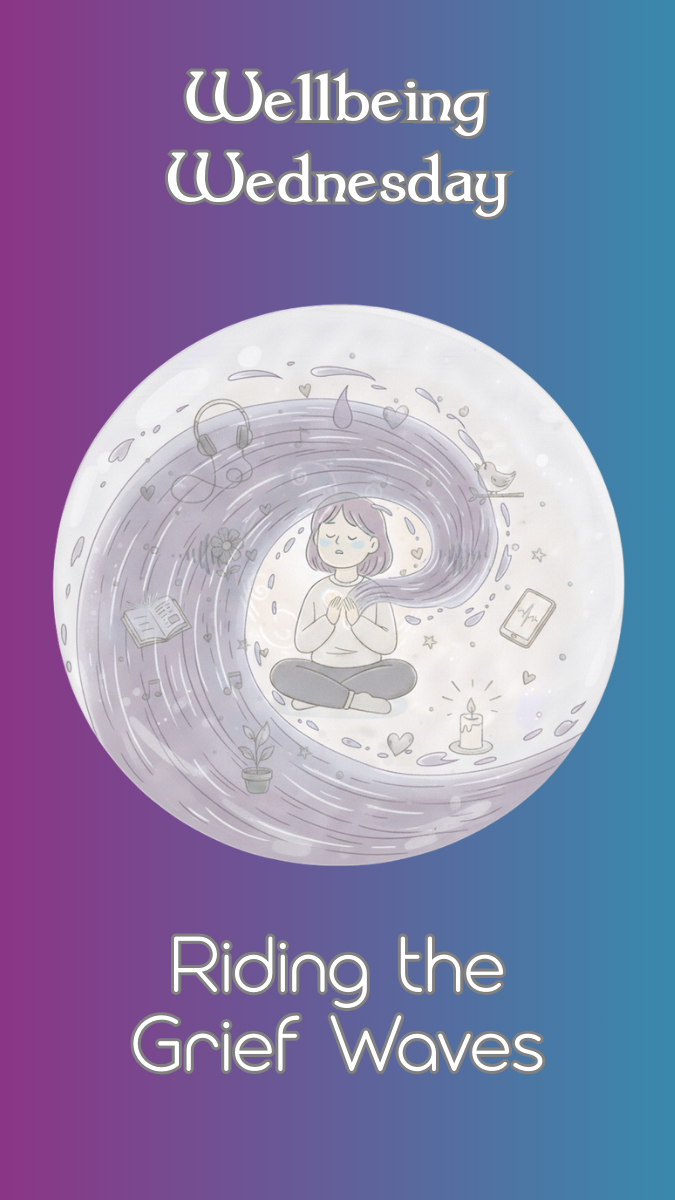
Wellbeing Wednesday: Riding the Grief Waves. How Music Therapy Can Hold the Unspeakable
Welcome back to Wellbeing Wednesday. Today, I am leaning into a topic that is as universal as it is deeply personal: Grief.
Grief is not a problem to be solved or a task to be finished. It is a profound, messy, and often silent transition. When we lose someone or something dear to us, our world loses its melody. Words often feel too small, too clumsy, or simply unavailable to describe the weight we carry. And once the initial pain has passed, the waves of grief can roll over us for years into the future. Our life experience grows, but the pain can just be as sharp when it hits.
In music therapy, we believe that when words fail, music speaks. Music doesn’t ask us to “move on”; instead, it provides a container to help us “move through.”
1. Music as a “Safe Container” for Emotion
Grief often feels like an unpredictable ocean, one moment calm, the next a tidal wave. Music provides a structure that can hold these intense emotions without us becoming overwhelmed by them.
- The Music Therapy Link: A piece of music has a beginning, a middle, and an end. When we listen to a song that reflects our sadness, we are allowing ourselves to feel that emotion within a “safe boundary.” The music “holds” the grief for us for three or four minutes, allowing us to express it and then gently bringing us back to the present.
- The Practice: Create a “Grief Sanctuary” playlist. These aren’t songs to make you “happy,” but songs that validate your pain. When the wave hits, put on your headphones and let the music be the witness to your feelings.
2. The Bridge of “Hiraeth” and Connection
As I’ve written about before, Hiraeth is that deep longing for a home or a person that is no longer reachable. In grief, this longing can feel like a physical ache.
- The Music Therapy Link: Music is one of the few things that can bridge the gap between the “then” and the “now.” Hearing a song that a loved one loved, or a melody you shared, can trigger positive reminiscence.
- The Practice: Use music as a “Memorial Soundscape.” Intentionally listening to your loved one’s favorite music isn’t about dwelling in sadness; it’s about consolidation. It is a way of saying, “You are still part of my journey.” It transforms a painful absence into a resonant presence.
3. Creating a “New Harmony”
Eventually, grief stops being a visitor and becomes a permanent part of our landscape. Wellbeing in grief isn’t about returning to the “old you”, it’s about finding a New Harmony where the loss and the life coexist.
- The Integration: Music therapy encourages “Active Music Making.” This might be writing a simple lyric, learning a new instrument in their honor, or joining a community choir. When we create sound, we are moving from a passive state of “being hit by grief” to an active state of “expressing our journey.”
A Gentle Ritual for a Day Where the Grief Wave Hits:
- The “Check-In” Note: Hum a single note that matches how you feel right now. Is it low and heavy? Is it thin and wavering? Don’t judge it. Just let it vibrate.
- The “Holding” Song: Listen to one song that feels like a hug from the person or time you miss.
- The “Release” Breath: Exhale with a long “Sss” sound, imagining some of the tension leaving your shoulders.
Grief is a long journey to becoming the “new you,” but you don’t have to walk it in silence. Let the music hold you when you cannot hold yourself.

You May Also Like

Wellbeing Wednesday: Self-Care Glimmers
Wellbeing Wednesday: The Magic of the Hum. Our Portable Reset Button