

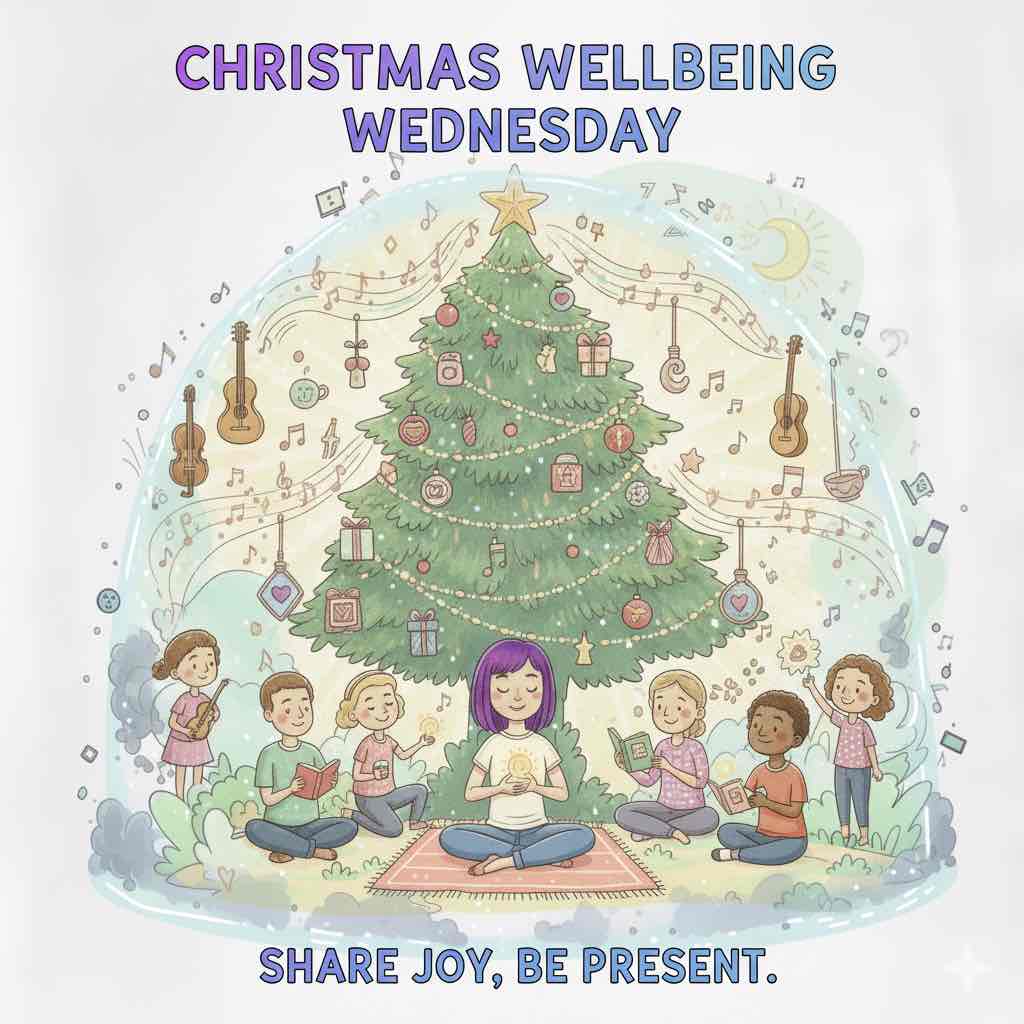
Wellbeing Wednesday: Taming the Jingle Bells. Finding Peace in a Season of Sensory Overload
Welcome back to Wellbeing Wednesday! As the Christmas lights go up and the festive carolling starts in earnest, we are entering one of the most exciting (and potentially exhausting…. especially for those musicians among us!) times of the year.
Christmas is a beautiful time of connection, but it is also a relentless period of sensory overload. From flashing lights and loud music to crowded shops and non-stop social demands, our nervous systems begin working overtime.
If you find yourself feeling frazzled, snappy, or inexplicably exhausted by mid-December, you’re not failing at “festive cheer”, you may be experiencing sensory burnout.
The Anatomy of Holiday Overload
Our brains are designed to process sensory information, but during the holidays, the sheer volume, frequency, and intensity of stimuli spike dramatically:
- Visual Overload: Thousands of twinkling lights, bright store displays, metallic wrapping paper, fast-moving crowds……..
- Auditory Overload: Non-stop, often aggressive and loud Christmas music; crowded party chatter; loud children; sirens and traffic……
- Olfactory Overload: The constant presence of strong scents (pine, cinnamon, baking, heavy perfumes) can be overwhelming……
- Social Overload: Back-to-back gatherings and events, forced small talk, and the pressure to perform or bring “joy” can leave our mental battery completely drained.
When our system is constantly bombarded, it can enter a state of perpetual high alert, leading to anxiety, exhaustion, and less capacity to handle even minor stresses. True wellbeing during this time may mean actively managing all of this external noise.
🛑 Finding Your Quiet Corner: Practical Sensory Hacks
Your most important self-care routine in December is creating and enforcing barriers between yourself and the demands of the season.
1. Tips to Manage the Visual Chaos
- Designated “Dark Time”: Schedule at least 30 minutes every evening with the main lights off. Use soft, indirect lighting (lamps, candles) to allow your eyes and brain to rest from the intense visual stimuli.
- Unplug and Look Away: When standing in line at a store, instead of staring at your phone or the chaotic displays, focus on something simple, like the pattern on the floor or the palm of your hand. Grounding your vision calms your central nervous system.
- Curate Your Space: If your home decor is starting to feel overwhelming, put away one cluster of decorations. Less visual clutter equals less cognitive processing.
2. Tips on Taming the Auditory Assault
- The Headphone Shield: Try keeping a pair of noise-cancelling headphones (or even earplugs) in your bag at all times. Use them unapologetically on crowded transport, while shopping, or even when wrapping gifts at home.
- Control Your Soundscape: If you are home, try listening to instrumental music, nature sounds, or simple binaural beats. Give your ears a break from lyrics and sudden noise changes.
- Schedule Silence: Book “Silence Appointments” in your calendar. Whether it’s 15 minutes in your car before heading into work or locking yourself in a quiet room, make silence a non-negotiable part of your day.
3. Try to Prioritize Your Mental Energy (Social Boundaries)
The pressure to say yes to every invitation/event contributes significantly to sensory overload.
- The “One Event” Rule: Limit yourself to one major social event per weekend. If you have two, ensure the second one is extremely low-key (like a quiet coffee, not a massive party).
- The Early Exit Strategy: If you must attend a large event, commit to a strict departure time before you arrive. Tell the host you can only stay for the first hour and then leave when your pre-determined time is up; no guilt necessary.
- Avoid Small Talk Purgatory: When feeling depleted, stick to conversations with people you genuinely like. Deep, meaningful connection is less draining than superficial pleasantries with dozens of strangers.
This Christmas, try to remember that joy and peace are not found in the volume of lights and gifts or the length of your to-do list. They are found in the intentional spaces you create for yourself and your loved ones. Giving yourself and your family the gift of connection is the greatest wellbeing boost you can offer. Simply sitting together listening to gentle, calming music will refuel your connection and help to co-regulate your system.
How are you fighting sensory overload this week? Share your best survival hacks in the comments!


You May Also Like

Wellbeing Wednesday: Self-Care Glimmers

Wellbeing Wednesday: The Under-16 Social Media Ban. Navigating the Shift from “Mars” Back to Earth