

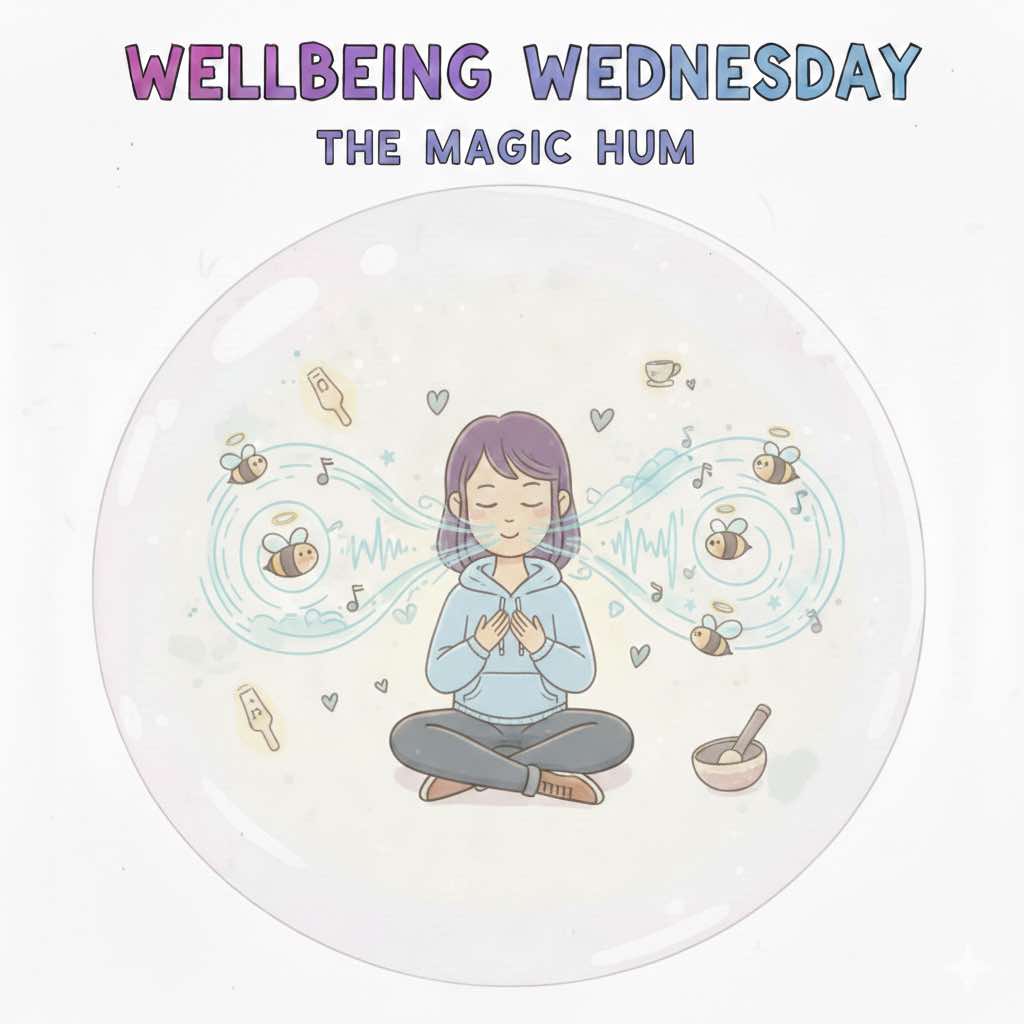
Wellbeing Wednesday: The Magic of the Hum. Our Portable Reset Button
Welcome back to Wellbeing Wednesday. I’ve been talking a lot recently about one of the simplest, oldest, and most effective tools for wellbeing that we carry with us every single day: your hum.
In a world full of expensive wellness gadgets and complex routines, we often overlook the power of our own vibration. Whether you are a professional singer preparing for a show, a parent trying to soothe a restless child, or a busy professional feeling the onset of burnout, the humble hum is your secret weapon for both physical readiness and emotional regulation.
1. The Ultimate Vocal Warm-Up
If you use your voice for work (whether that’s singing, teaching, or back-to-back Zoom calls) you know the feeling of “vocal fatigue.” Your throat feels tight, your voice sounds thin or creeky, and sound making starts to feel like an effort.
- The Science (in brief): Humming is the “gentle massage” of the vocal world. Because your lips are closed, the air pressure is reflected back down toward the vocal folds. This creates a cushion of air that allows your vocal cords to vibrate with minimal strain.
- The Benefit: It engages the resonance in your face and chest without the effort of full speech or singing. It increases blood flow to the larynx and can relieve any vocal cord tension.
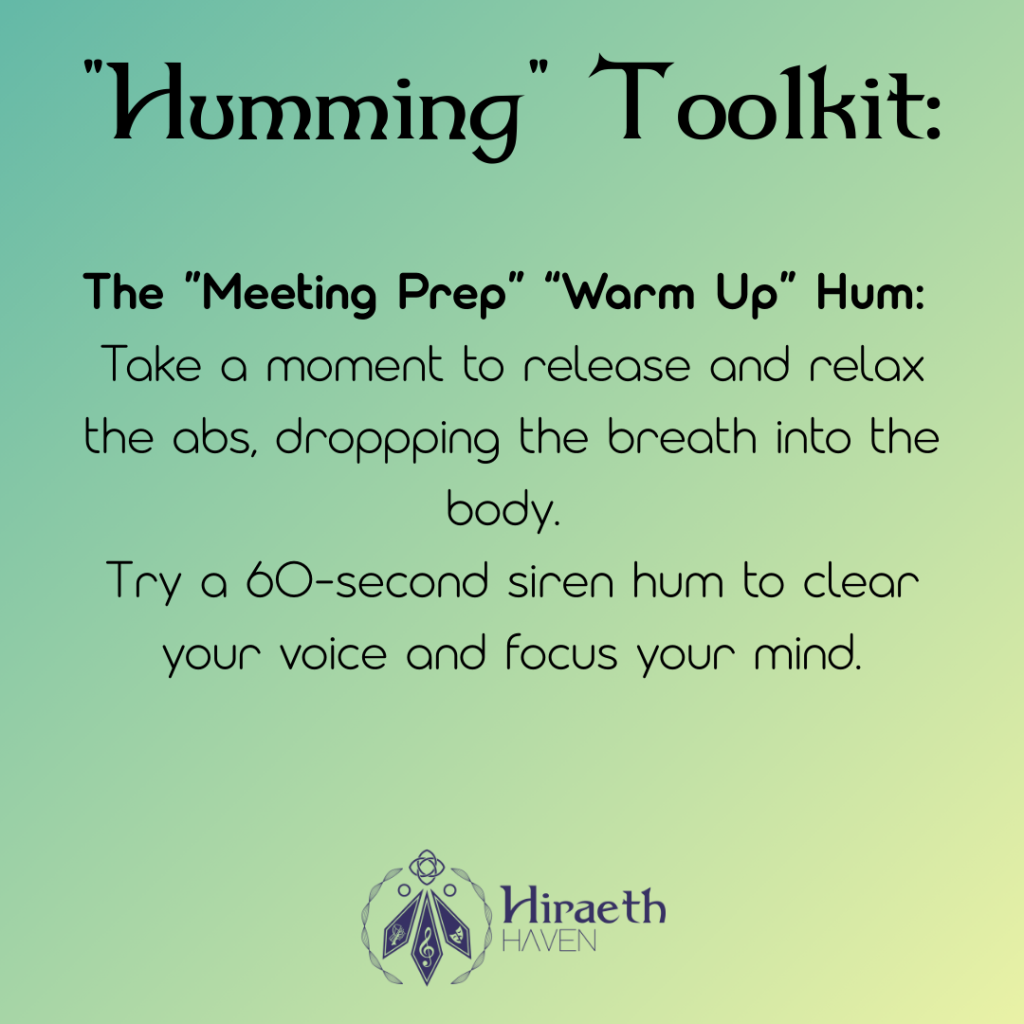
The 2-Minute Warm-Up: Start with releasing tension in your abs, focusing the breath into your stomach, out of the shoulders and chest area. Once you have settled into this release, exhale and vocalise with a low, comfortable “Mmm” sound. Imagine the sound is behind your front teeth. You can gradually extend this into a gentle siren, gliding the pitch up and down. Do this for two minutes before your first meeting or rehearsal, and notice how much “richer” and easier your voice feels.
2. The Vagus Nerve: The Biological Reset
The real magic of humming, however, happens deep within your nervous system.
Running through your body is the Vagus Nerve, the “command center” for your parasympathetic nervous system (your “rest and digest” mode). This nerve passes right by your vocal cords and inner ear.
- The Internal Massage: When you hum, the physical vibration stimulates the vagus nerve. This sends an immediate signal to your brain that it is safe to relax. It lowers your heart rate, reduces blood pressure, and flushes out cortisol (the stress hormone).
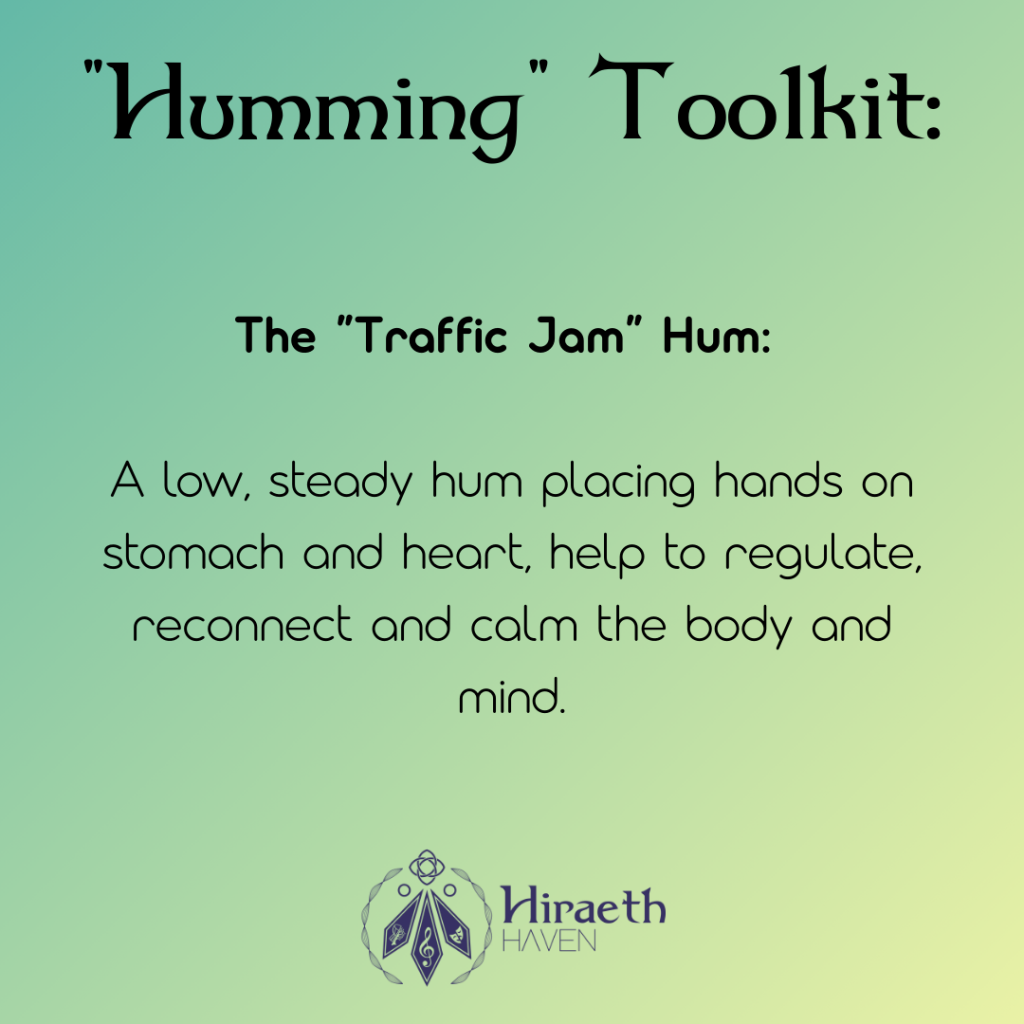
- Self-Regulation: For adults, a 30-second hum can act as a “circuit breaker” during a stressful workday. It pulls you out of your head and back into your body.
3. Humming for Children: Co-Regulation in Action
For parents and caregivers, humming is a superpower for soothing. Children (especially babies and toddlers) are incredibly sensitive to the physical state of the adults around them.
- The Vibrational Hug: When you hold a distressed child and hum, they don’t just hear the sound; they feel it. The vibration of your chest wall acts as a mechanical sedative for their nervous system.
- Co-Regulation: As your heart rate slows through your own humming, the child’s heart rate begins to mirror yours. This is co-regulation at its most organic. You are “sharing” your calm with them through sound.
Try this: Next time your child is having a “meltdown” or struggling to sleep, don’t use more words. Just sit near them or hold them and hum a low, steady, repetitive note. It’s harder to argue with a vibration than it is with a sentence.
Your “Humming” Toolkit

Humming is free, it’s private, and it’s always available. It is the sound of your own body coming into harmony.


You May Also Like

Wellbeing Wednesday: Celebrating Chaos Why An Imperfect Family Gathering is Perfectly Perfect

Wellbeing Wednesday: The Unplugged Gig – Why Self-Care Is Non-Negotiable for Freelance Performers