

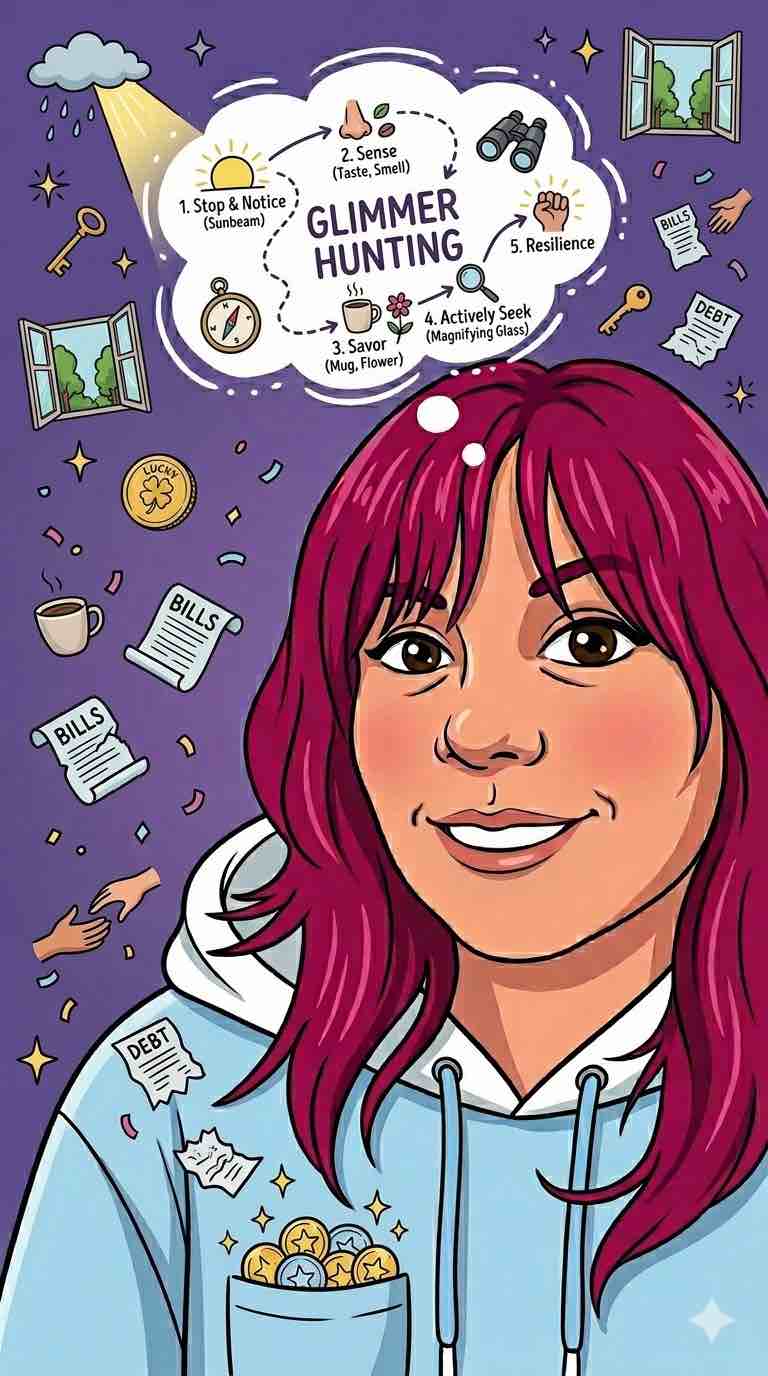
Wellbeing Wednesday: Finding the “Glimmers” in the Financial Static
Welcome back to Wellbeing Wednesday. Today, I want to get real about a type of “noise” that is currently playing very loudly in many of our lives, and most definitely in mine: Financial Stress.
Between the creeping cost of petrol and the grocery shop, and those “life happens” bills (in my house recently, it’s been a flurry of unexpected vet trips and the unavoidable expense of new glasses for our youngest and me), it can feel like we are constantly bracing for the next hit. When you are self-employed or managing a household, that financial “bass note” can become a constant, low-frequency thrum of anxiety that makes it nearly impossible to hear anything else.
So, how do we actively monitor and maintain our wellbeing when the “Body Budget” is being drained by the actual budget? How do we find the space to breathe when the numbers aren’t adding up?
1. Acknowledging the “Alarm”
Financial stress isn’t “all in your head.” It is a physiological trigger. When we worry about money, our bodies enter a state of survival arousal. Our heart rate climbs, our breathing shallows, and our “creative brain” shuts down to make room for “survival brain.”
- The Wellbeing Truth: You cannot “positive-think” your way out of a bill, but you can prevent the stress of that bill from breaking your instrument.
- The Practice: Acknowledge the feeling. Say it out loud: “I am feeling a spike of financial anxiety right now.” By naming it, you move the stress from an overwhelming “cloud” to a specific data point you can manage.
2. Hunting for “Glimmers”
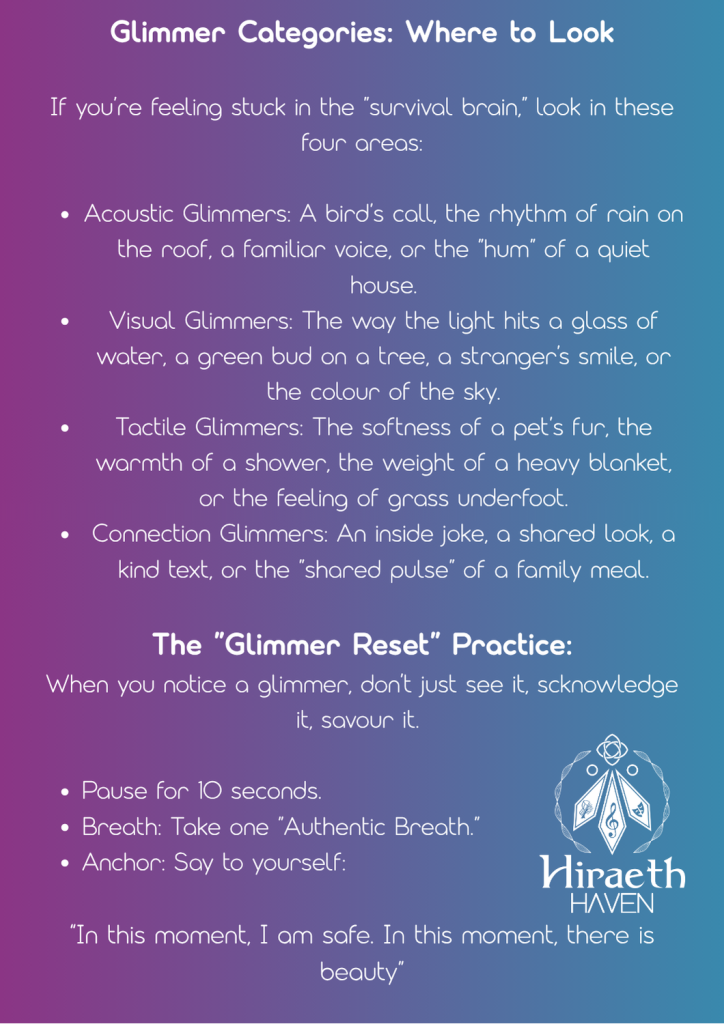
In trauma-informed care, we talk about Glimmers (the opposite of triggers). A glimmer is a micro-moment of safety, beauty, or connection that tells your nervous system, “In this exact second, I am okay.”
- The Music Therapy Link: When the “Financial Static” is loud, we have to actively tune our ears to a different frequency.
- The Practice: Seek out one “zero-cost” glimmer a day. The way the light hits the trees on your drive (even if the petrol is expensive), the perfect rhythm of a bird’s song, or the warmth of a shared laugh over a cup of tea. These aren’t “distractions”; they are vital nervous system resets.
3. Using the “Breath of Agency”
When bills pile up, we feel a loss of control. We feel like life is “happening” to us. Mindful breathing is the quickest way to reclaim your Agency.
- The Exercise: The 4-7-8 Reset.
- Inhale for 4 (Taking in what you need).
- Hold for 7 (Creating a space of stillness).
- Exhale for 8 (Releasing the “static”).
- The Clinical Twist: Try repeating this with a low hum on the exhale. Place your hand on your chest and feel the vibrations of the humming in your body. Allow the physical sensation to focus the brain into that centred place. You can do this anywhere, extend it into a longer hum, a song, or some “sirens”….whatever feels good. Focus on the sensation of the vibration moving through your body and into your hands.
- Why it works: The long exhale stimulates the Vagus Nerve, physically forcing your body out of “Survival Mode” and back into “Rest and Digest.” It won’t pay the vet bill, but it will give you the mental clarity to handle the phone call.
4. The “No-Cost” Soundtrack
Music is one of the few transformative tools we have that doesn’t have to cost a penny.
- The Practice: The “Abundance” Playlist. Create a playlist of songs that make you feel “rich” in spirit—songs that remind you of your history, your strength, and your Authentic Self.
- The Hum of Safety: When the panic rises, try humming a low, steady note. That vibration is a physical reminder that your “Haven” is internal and portable, no matter what the bank balance says.
Your Financial Stress Toolkit:
- Active Acknowledgement: Don’t suppress the fear; name it and then breathe through it.
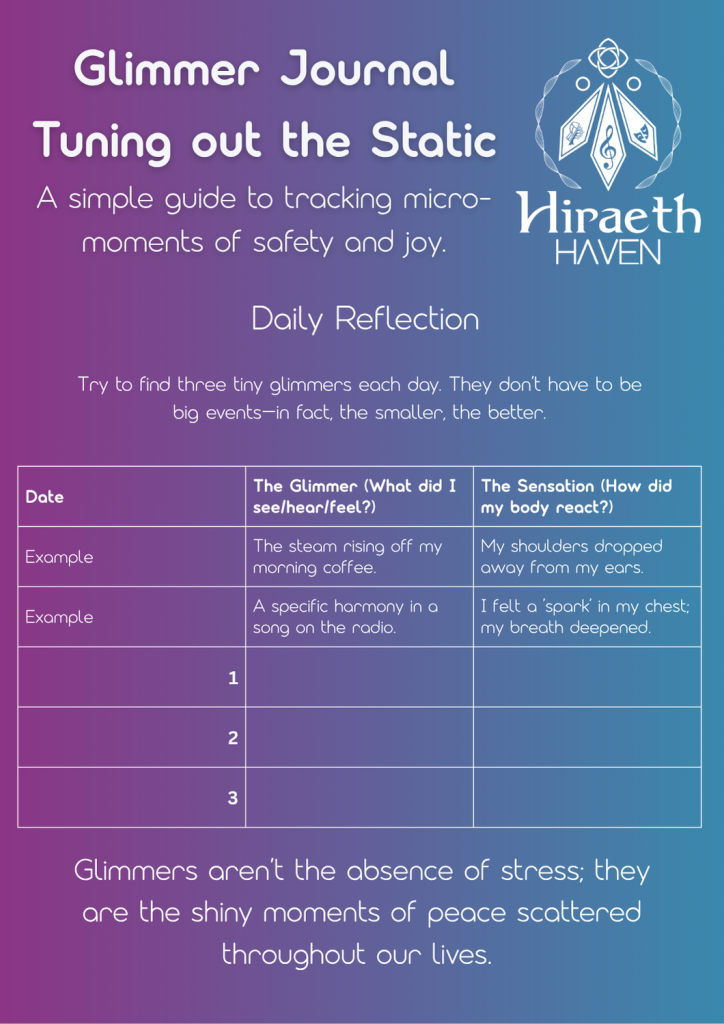
- Glimmer Hunting: Find three tiny things today that are beautiful and free.
- The Vagal Exhale: Use the 8-count hummed exhale to clear the “static.”
Try using the Glimmer Checklist below to help you to acknowledge and embrace these micro moments.
MOST IMPORTANTLY:
Try to find the space to embrace your own creativity, whatever your heart song is. Five minutes to journal, paint, sing, or just run around, even a glimmer of this can help to reconnect you through the overwhelm that feels out of your control.
Wellbeing isn’t about having a perfect life; it’s about having a resilient one. Even when the chords are clashing and the rhythm is difficult, you are still the conductor of your own breath.


You May Also Like

Wellbeing Wednesday: The Magic of the Hum. Our Portable Reset Button

Wellbeing Wednesday: Celebrating Chaos Why An Imperfect Family Gathering is Perfectly Perfect