

Wellbeing Wednesday: Navigating the Exam Season Symphony
Welcome back to Wellbeing Wednesday. If you are a student, a teacher, or a parent living in a house currently filled with highlighters and practice papers, you know exactly what the “Exam Season” frequency feels like.
It is a season of high-stakes “performance,” where the pressure to achieve can create a constant, frantic tempo in our internal lives. In the world of performing arts and music therapy, we understand that no one can play their best if their instrument is out of tune or their strings are stretched to the breaking point and so many people think they need to pause creative endeavours to focus on exams, but this is not always the best way. Embracing your creativity at this time may help to lower your anxiety and increase productivity. It will most certainly help to avoid burn out.
So I wanted to talk about how to maintain your well-being during exams, not by “ignoring” the work, but by managing the “Acoustic Environment” of your mind.
1. The “Performance Anxiety” Reset
Exams are, essentially, a solo performance. The “Public Critic” in our heads starts to shout: “What if I forget? What if I fail? What if I’m not enough?” This triggers our survival brain, making it harder to access the complex information we’ve actually spent months learning.
- The Music Therapy Link: Grounding the Solo. When a performer is panicking, we bring them back to their senses.
- The Practice: The 5-4-3-2-1 Sensory Check. Stop the revision for 2 minutes.
- Name 5 things you can see.
- 4 things you can touch.
- 3 things you can hear.
- 2 things you can smell.
- 1 thing you can taste.
- The Goal: This pulls your brain out of the “future-fearing” loop and back into the safety of the present moment.
2. Managing the “Revision Noise”
We often think that total silence is the only way to study, or we blast high-energy music to stay awake. Both can actually increase cortisol (the stress hormone).
- The Wellbeing Tip: The “Binaural” Buffer. Try listening to Lo-Fi beats or Alpha Wave music. These tracks are designed to mimic the brain’s natural “focus” frequency.
- The Practice: The Pomodoro Playlist. Work for 25 minutes with focus music, then have a 5-minute “Sonic Break” where you listen to your favourite high-energy song and move your body.
- Why it works: It prevents the “frazzle” of long-term concentration and gives your brain a chance to consolidate what you’ve just read.
3. The “Night Before” Lullaby
Sleep is the most important “revision” tool you have. It is during sleep that your brain moves information from short-term memory to long-term storage. If you don’t sleep, you are essentially erasing your work.
- The Practice: The Digital Sunset. As we discussed in our Digital Detox blog, leave the phone downstairs. The “anticipatory anxiety” of a late-night text can ruin your REM cycle.
- The Tonal Reset: Before bed, try a Low Hum. Place your hand on your chest and hum a long, steady note. Feel the vibration. It tells your nervous system: “The work is over for today. It is safe to rest.”
Your Exam Season Toolkit:
- The Morning Anchor: One deep, “Authentic Breath” before you open the first book.
- The “Glimmer” Break: 5 minutes outside. Look at the sky, not the screen.
- The Power Track: Have one song that makes you feel “Solid” and “Capable.” Play it right before you walk into the exam hall to set your internal tempo.
The Exam Season Study Buffer: Playlist Support.
I’ve put together a playlist of music that may help during this stressful season. If you are a student, try listening to some of these at the suggested times, if you are a parent or supporter, you could have some of this music playing in the car or at home to help support your loved one through this time.
1. The “Focus Flow” (For Revision)
The Goal: To mask background noise and encourage “Alpha Brain Waves” (the state of relaxed alertness).
- What to look for: Instrumental tracks with a steady tempo of 60–80 beats per minute (BPM). Avoid lyrics, as your brain will try to process the words instead of your notes!
- Genre Suggestions:
- Baroque Classics: Vivaldi or Bach (the steady mathematical rhythms are perfect for logic and memory).
- Ambient Video Game Soundtracks: (Think Skyrim or Minecraft) These are literally composed to keep you engaged without being distracting.
2. The “Anxiety Anchor” (For When Panic Rises)
The Goal: To physically lower your heart rate and trigger the “Rest and Digest” response.
- The Science: Look for music with long, sustained notes and no sudden changes in volume. This prevents the “startle” reflex.
- Suggested Songs/Artists:
- “Weightless” by Marconi Union: Specially designed with therapists to reduce anxiety by up to 65%.
- “Spiegel im Spiegel” by Arvo Pärt: A repetitive, bell-like piano and violin piece that feels like a steady heartbeat.
- “Gymnopédie No. 1” by Erik Satie: A timeless classic for finding a moment of stillness.
- Nature Sounds: Specifically “Green Noise” (wind through leaves) or heavy rainfall.
3. The “Power Performance” (The 5 Minutes Before the Exam)
The Goal: To move from “Anxious” to “Empowered.”
- What to look for: A song with a strong, driving beat and lyrics that remind you of your Authentic Self and your capability.
- The Practice: Listen to this on your way to the hall. Don’t look at your notes; just focus on the rhythm. This is your “Armor.”
The “Emergency Anxiety” Reset: The 2-Minute Hum
If you feel a panic spiral starting during a study session or even while sitting at your desk in the hall:
- Place your hand on your collarbone.
- Take a 4-count breath in.
- Hum a low, steady note on the exhale.
- Focus entirely on the vibration under your hand. This vibration sends a direct signal to your Vagus Nerve that you are safe. It overrides the “Alarm” and lets you get back to the music of your mind.
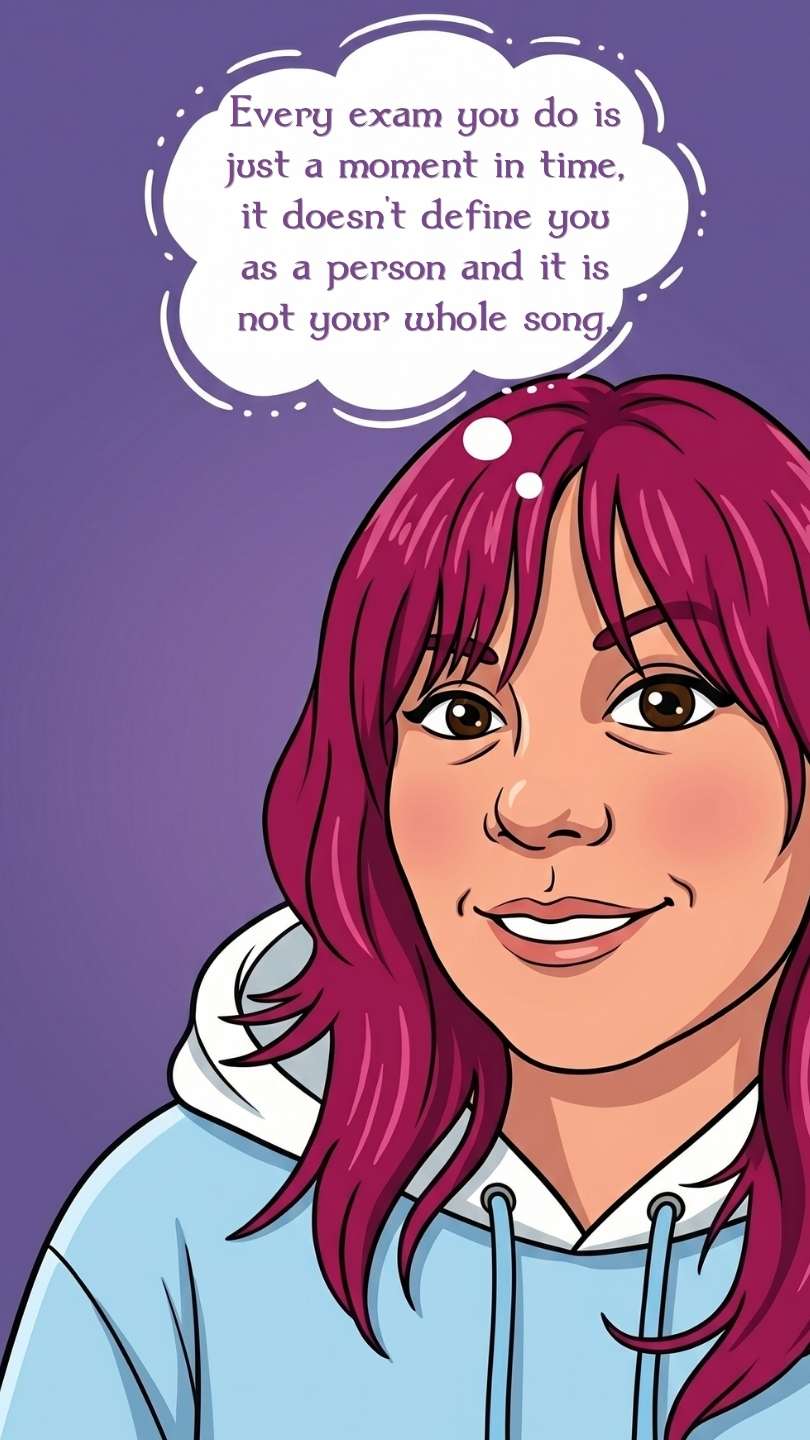
To every student and parent in the thick of it: You are more than a grade on a piece of paper. Every exam you do is just a moment in time, it doesn’t truly define you as a person and it is not your whole song.


You May Also Like
Wellbeing Wednesday: Taking Off the “Superwoman” Cape

Wellbeing Wednesday: Authentically You