

Wellbeing Wednesday: The Echo of Silence. Remembrance Day, Music Therapy, and Holding Space for Generational Trauma
Welcome back to Wellbeing Wednesday. Today marks a day that carries a profound, collective weight across the country: Remembrance Day.
At 11:00 AM, communities gather around cenotaphs, village greens, and school halls to observe the two-minute silence. It is a moment of deep solemnity to honour those who lost their lives in conflict and served their countries.
Yet as an HCPC-registered music therapist, musician, and parent, standing in that silence often stirs something deeper and quieter in the body than history lessons alone can explain.
Trauma doesn’t always stop with the generation that endured the mud of the trenches, the air raid sirens of the Blitz, or more recent military conflicts. It ripples outwards into family dining rooms, into unspoken grief, into how parents parent, and into how safe our nervous systems feel in the world.
Today, I wanted to take a moment to explore how music therapy could help us navigate generational trauma, and how we can use sound and intentional silence to honour what came before without becoming overwhelmed by the weight of it.
1. The Anatomy of Generational Trauma.
Generational trauma is a term used to describe how unresolved grief, hypervigilance, and shock experienced by one generation can shape the biology and emotional lives of the generations that follow.
You might not have experienced war yourself, but you may carry the physical habits born from it:
- A pervasive fear of scarcity or wasting food.
- An instinct to swallow vulnerability and “keep a stiff upper lip.”
- A nervous system wired for chronic alarm, always waiting for the other shoe to drop.
- The Music Therapy Link: The Overtone Series. In acoustics, when you strike a single piano key, you don’t merely hear that fundamental pitch. You activate a whole cascade of sympathetic higher frequencies called harmonics or overtones. Even if you can’t see them, they vibrate through the room. Generational trauma behaves exactly like those overtones: ancient events still vibrating quietly in our baseline emotional frequencies today.
- The Clinical Truth: You do not have to carry the burden of “fixing” or erasing what your ancestors felt. Acknowledging that certain tensions or griefs didn’t originate with you can relieve an immense amount of personal shame.
2. The Two-Minute Silence.
Silence on Remembrance Day is uniquely powerful, but for an overactive or traumatized nervous system, dead silence can sometimes feel intimidating or dysregulating. When external sound disappears, internal somatic noise (racing thoughts, a tight chest, or sudden sorrow) can roar.
- Reframing Silence as a Vessel: In music, a rest is not an absence of music; it is an active, structural choice that gives the surrounding notes their meaning. The two-minute silence is an acoustic container. It is a designated perimeter where an entire nation agrees to hold collective space so no single person has to carry grief alone.
- The Practice: Somatic Anchoring in Stillness. When observing silence today or at any point this week, ground your body rather than freezing:
- Feel the contact of your feet firmly on the ground.
- Place one hand gently over your heart or across your ribs.
- Notice your breath flowing in and out without attempting to silence your internal state. You are a living, breathing bridge between the past and the future.
3. Using Sound to Digest the Unspoken
One of the most potent elements of Remembrance ceremonies is the ceremonial bugle call: The Last Post, followed by the silence, followed by Reveille.
This musical sequence is an instinctive piece of clinical music therapy:
- The Last Post (Melodic Lament): It offers a soaring, mournful cadence that gives communal shape to grief, loss, and the setting sun. It gives our emotional brain permission to feel sad.
- The Pause (The Resting Space): The silence allows the nervous system to absorb the gravity of that expression.
- Reveille (The Awakening): The upbeat bugle call sounds a gentle, hopeful call back to life, breath, and present reality. It pulls the listener out of grief and grounds them in the light of today.
When words fail to address old family griefs or heavy collective atmosphere, music bypasses our intellectual defences and communicates directly with the limbic system, allowing stuck energy to gently process and move.
Your Remembrance & Grounding Toolkit:
- The “Ancestral Playlist” (Compassionate Resonance): If there are songs, hymns, or pieces of music associated with parents, grandparents, or family members who lived through difficult eras, listen to them intentionally today. Notice how your body reacts. Allow yourself to feel gratitude for their resilience while gently telling your own nervous system: “I am safe right now in this room.”
- The Low-Frequency “Grounding Drone”: If you feel unsettled or weighed down by the heaviness of the day, sit down and listen to a warm, low drone (such as cello suites, gentle brass, or low organ tones around 432 Hz). Low frequencies act as auditory ballast, calming the autonomic nervous system when anxiety spikes.
- Radical Grace for the Grief You Can’t Explain: If you find yourself tearful or ungrounded today without a clear personal reason, give yourself unconditional positive regard. We are part of a wider human symphony, and feeling that resonance simply proves your capacity for human empathy.
An Affirmation for the Generation Living Now
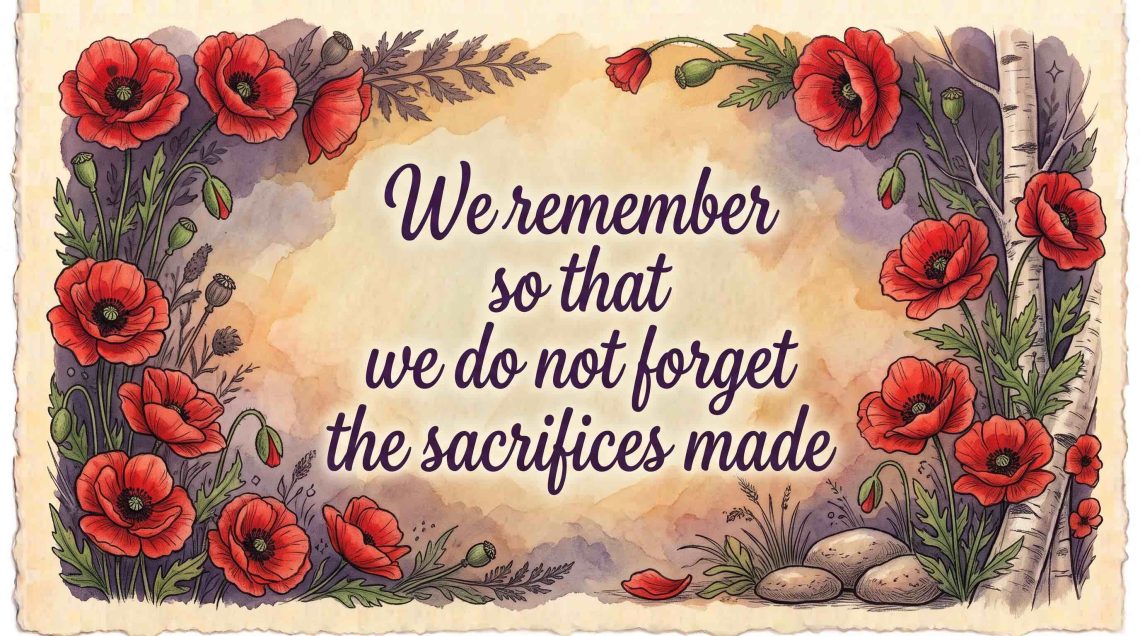
We remember so that we do not forget the sacrifices made. But we also remember so that we can cherish peace both in the world and within our own bodies.
Today, let the silence hold you rather than freeze you. Acknowledge the notes of the past, take a deep breath, and allow your own melody to continue with warmth, presence, and hope.

You May Also Like

Wellbeing Wednesday: The Acoustic Spring Clean

Wellbeing Wednesday: Performance in the Age of the “Public Critic”