
Uncategorized
-
Wellbeing Wednesday: The Price of Authenticity. Staying True to Your Values When the World Says “You Should”
Welcome back to Wellbeing Wednesday. Today, I want to talk about a quiet, constant battle that so many value-driven freelancers, therapists, teachers, and creatives face every single day.
It is the challenge of maintaining internal congruence: staying fiercely true to your core beliefs, ethics, and standards when the world around you is loudly shouting that you “should” do things differently.
If I am being completely candid, this is something I wrestle with regularly in my own work. As someone who wears multiple hats (a music therapist, peripatetic teacher, private music tutor, performer and musical director) I am constantly bombarded with well-meaning advice from the outside world:
“You SHOULD be charging much more for your private lessons.”
“You SHOULD stop doing so much community and volunteer work for free.”
“You SHOULD expand your teaching list to include every instrument parents ask for—it’s easy money!”
“You SHOULD use backing tracks, you’d make more money” (don’t get me started on this one, it is a major bug bear – KEEP MUSIC LIVE!!!)
On paper, business advice often boils down to pure financial optimisation: maximise profit, scale up, and charge whatever the market will bear. But when you operate from a clinical, ethical, and deeply human foundation, pure business logic often clashes directly with your personal values.
So how do we navigate this frustration? How do we protect our “wellbeing baseline” when staying true to ourselves means swimming against the cultural tide?
1. Pricing with Purpose vs. Pricing People Out
Let’s talk about the constant pressure to “know your worth” by simply raising your prices. Yes, fair pay for qualified professionals is vital; we all have bills to pay and families to support. But in the real world, especially within our local communities, blindly pushing rates up has real-life consequences.
- The Local Reality: If I were to raise my lesson rates to match high-end urban corporate standards, I know exactly what would happen: I would price local families and passionate young people straight out of the market.
- The Value Anchor: My belief is that music therapy and high-quality music education shouldn’t be a luxury reserved exclusively for the privileged. Keeping lessons accessible to local families isn’t “bad business”; it is a deliberate, value-led choice.
- The Reframe: Your worth isn’t measured by how high a price tag you can attach to an hour of your time. Your worth is reflected in the integrity, accessibility, and genuine impact of your work. When you price with purpose, you aren’t “undervaluing yourself”; you are actively building the kind of community you want to live in.
2. The Mechanics of Integrity: Why Qualifications Matter
Then comes the second side of the coin: the pressure to be a “jack-of-all-trades” for easy income.
In the singing and music world, there is a pervasive problem that drives me quietly mad. Too often, people offer singing lessons simply because they play the piano decently or can carry a tune themselves, without having the faintest understanding of vocal anatomy, mechanics, or safe vocal technique. Parents and bill-payers, understandably “bamboozled” by musical jargon or fancy branding, pay into these services trusting that their child is in expert hands.
Unintentionally, poorly trained instruction can cause real harm, leading to vocal strain, fatigue, or long-term bad habits that take years to unlearn.
- My Line in the Sand: I have a strict, non-negotiable personal boundary: I will never teach an instrument or technique that I do not deeply understand or am not clinically/professionally proficient in.
- The Clinical Duty of Care: My training as a music therapist and vocal practitioner isn’t just a badge on the wall; it is my duty of care. Refusing to take money for things outside my expertise isn’t a missed opportunity, it is the very definition of professional congruence.
3. The Exhaustion of “The Shoulds” (And How to Protect Your Peace)
Standing by your principles when others are cutting corners or telling you you’re “doing it wrong” is emotionally draining. It can trigger deep frustration, self-doubt, or make you feel like you are working twice as hard for half the credit.
- The Music Therapy Link: Resonance and Dissonance. In Carl Rogers’ humanistic psychology, congruence occurs when your internal self (your values, beliefs, and ethics) matches your external behavior. When there is a gap between what you believe and how you act, your nervous system experiences constant, grating dissonance.
- The Relief: Playing a role or chasing money at the expense of your values creates chronic internal friction. Standing firm in your congruence might feel lonely at times, but it allows you to sleep at night with a clear head and a peaceful heart. Your internal instrument stays perfectly in tune.
Your Congruence Toolkit:
- Name Your Non-Negotiables: Write down 2–3 core values that guide your work (e.g., Accessibility, Integrity, Duty of Care). When someone offers advice starting with “You should…”, run it through those core values first. If it doesn’t fit, let it go.
- Reframe Volunteering as “Soul Equity”: Community choir work or local volunteering isn’t “wasted time.” It is how we invest in social equity and feed our own creative souls outside the commercial machine.
- The “Unconditional Positive Regard” for Your Path: Stop comparing your slow, ethical, value-driven build with someone else’s fast, high-volume hustle. Authenticity is a marathon, not a sprint.
Staying true to your beliefs in a world obsessed with quick profit isn’t easy. But when you look in the mirror at the end of a long day of teaching, therapy, or directing, knowing you treated people fairly and held your standards high is worth more than any price hike. Keep standing firm; your community needs your authentic voice.
-
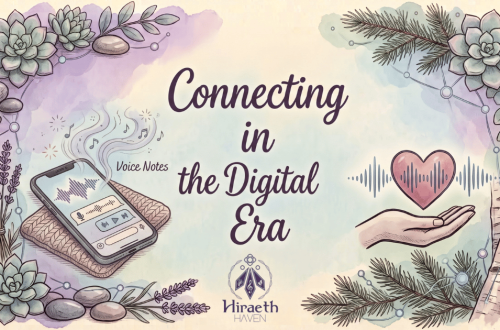
Wellbeing Wednesday: The Voice-Note “Podcast”. Connecting In The Digital Era
Welcome back to Wellbeing Wednesday. Today, I want to talk about something that sits right at the intersection of modern working life, friendship, and staying human in an increasingly digital world: how we build genuine connection when our work lives are scattered across the map.
If you know me personally, you know that my voice notes are… infamous? lengthy? speedy? (Truthfully, all of these words are probably accurate) They are rarely a quick 10-second “I’m on my way.” Instead, they are rolling, mini-podcasts; unfiltered, one-sided chats recorded while driving between jobs, walking to the school run, or sitting in the car outside a rehearsal hall.
As a freelancer wearing multiple hats (or carrying various “Horcruxes” as we talked about recently!), I don’t get the traditional workplace luxuries. There is no shared breakroom, no impromptu “water cooler” chat with colleagues, and no spontaneous Friday afternoon catch-ups in the staff room. When your workday is spent moving from one independent contract to the next, the social side of your life inevitably shifts onto your phone. Being honest, would I rather meet a friend for a coffee and chat in real time? Of course I would! But the nature of my work and of my friends being all over the globe makes this pretty tricky.
So how do we protect our wellbeing, maintain rich human relationships, and avoid feeling isolated when our main avenue for connection has to be digital?
1. Reclaiming the “Asynchronous Water Cooler”
We tend to feel guilty about using technology for friendship, assuming that if it isn’t an in-person coffee or a live phone call, it’s somehow “less than.” But for busy, multi-hyphenate lives, trying to synchronise schedules with friends who are equally submerged in parenting, work, and life admin can feel like trying to solve an impossible puzzle.
- The Reframe: Voice notes create an asynchronous water cooler. When I record a five-minute (sometimes make that 20 (I’m so sorry!!! haha)) voice note for a friend, I am giving them my presence, my vocal tone, my laughter, and my honest reflection without demanding their immediate attention.
- The Relief: They can listen to it while folding laundry, cooking dinner, or walking the dog, and reply when their space allows. It removes the pressure of matching calendars while preserving the intimacy of hearing a human voice.
2. The Clinical Power of Vocal Resonance
In music therapy, we pay acute attention to the prosody of the human voice; the rhythm, pitch, cadence, and warmth of vocal expression. Text messages are efficient, but they are emotionally flat. They leave huge gaps for our anxious brains to fill in with assumptions or misinterpretations.
- Why Voice Notes Work for the Nervous System: Hearing a friend’s voice activates your brain’s social engagement system. The subtle pitch shifts and gentle laughter in a voice note send safety signals to your vagus nerve far faster than an emoji ever could.
- It’s a Two-Way Gift: For the speaker, “talking out loud” to a trusted friend (even without them there in real-time) helps process the day’s events. For the listener, it feels like opening a small, personalised audio gift when they finally have a quiet moment.
3. Protecting Your Wellbeing When Socialising Goes Digital
While digital connection is a lifeline, we also have to be intentional so that our screens don’t become another source of sensory burnout.
- Ditch the “Immediate Reply” Expectation: Establish a clear, shame-free understanding with your inner circle: Voice notes are podcasts, not emergency broadcasts. Knowing you don’t have to reply instantly keeps the exchange feeling like a joy rather than another task on your to-do list.
- The “Hands-Free” Reset: Record your voice notes while moving; walking outside, driving between jobs, or pottering around the kitchen. This combines social connection with physical movement, helping you step out of “work mode” and back into yourself.
- Acknowledge the Need: Don’t apologize for needing to connect. If you miss the camaraderie of a team, acknowledge that void. Sending a mini-podcast to a friend isn’t self-indulgent; it’s how you keep your social instrument tuned when you work alone.
Your Digital Connection Toolkit:
- Send a “No-Reply Needed” Voice Note: Reach out to a friend today simply to say: “I was thinking of you during my commute! No need to reply, just sending love.” It builds warmth with zero pressure on either side.
- Build Your “Digital Staff Room”: If you work independently, create a small group chat or voice-note thread with 2–3 other creative or freelancing friends. Use it as your virtual water cooler to celebrate wins, vent about tricky days, or share a laugh.
- Practice Active Listening: When listening to a friend’s audio update, give them your full attention for those few minutes rather than skimming. Let their voice be the “focus track” of your pause.
We were never meant to navigate our working lives in total isolation. Even if your “break room” is currently the driver’s seat of your car and your “water cooler” is a three-minute voice message, lean into it! Use your voice, share your unedited story, and let technology help you stay anchored to the people who matter most.
-
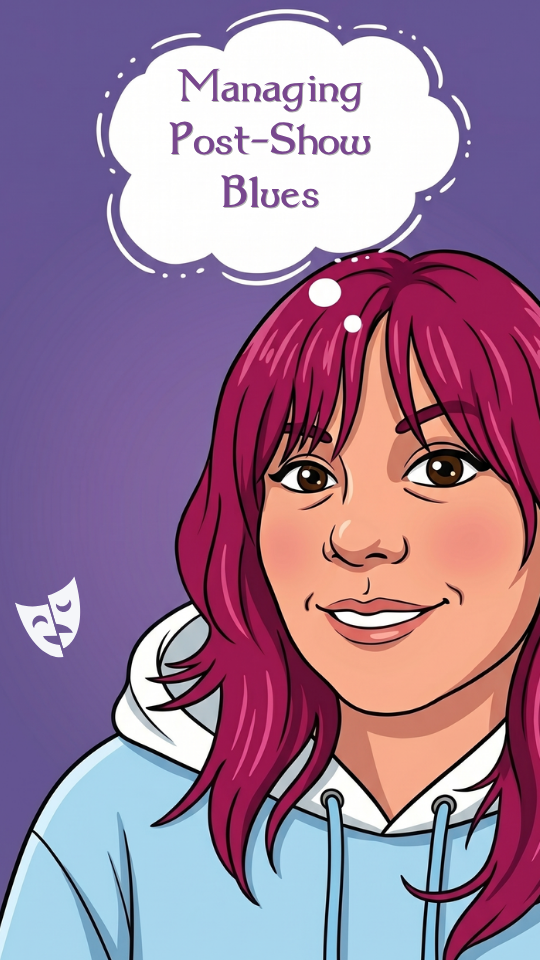
Wellbeing Wednesday: Managing the “Post-Show Blues”; Grounding Your Nervous System After the Curtain Falls
Welcome back to Wellbeing Wednesday. If you were with me last week, you’ll know my world was operating at a beautifully intense frequency as the Musical Director for Saundersfoot Footlights’ production of Made in Dagenham.
Much to our general disappointment, the show is now firmly packed away, and the hall has returned to its usual state. But if you’ve ever been involved in a show, or even if you’ve sat in the audience and been deeply moved by a powerful performance, you know exactly what happens next.
The quiet arrives, and with it comes a sudden, heavy drop in emotional energy. In the theater world, we call it the “Post-Show Blues.” In music therapy, we look at this not as an emotional failing, but as a predictable physiological comedown. When you spend days or weeks living in high-intensity emotion, adrenaline, and shared connection, your nervous system takes a massive hit when it suddenly stops.
So then, how can we care for ourselves when the spotlight fades and the “post-show silence” feels a bit too loud?
1. Understanding the “Adrenaline Crash”
Whether you were part of the company creating the show, or someone gripped by the story from row J, a powerful performance floods your system with cortisol, adrenaline, and dopamine. Your brain is firing on all cylinders, deeply connected to a collective pulse.
- The Music Therapy Link: The Decrescendo Drop. In a musical score, a decrescendo is a gradual fading of sound. But this post-show blues feel less like a gradual fade and more like a sudden, jarring silence. Your body goes into a state of “withdrawal” from the emotional high, leaving you feeling empty, run-down, or unexplainably tearful.
- The Practice: Give your body permission to crash. The fatigue you feel isn’t just laziness; it is your nervous system begging for a re-balance. Treat yourself with the same Unconditional Positive Regard you’d give a tired child. Allow yourself to feel and process these changes—some may even say you can embrace them for the memories of what you achieved.
2. Transitioning from the “Public Harmony” to Your Inner Haven
Onstage or in a packed auditorium, your personal identity blends into a shared community experience. Coming back home to the laundry, the routine, and the bills can feel incredibly grounding, but also incredibly cold.
- The Danger: Trying to immediately force yourself back into “Superwoman” mode (yep, I know, that’s me!) before you’ve processed the emotional output.
- The Practice: The “De-Glow” Routine. Create a physical ritual to signal to your brain that the performance is officially over. Wash off theater makeup slowly, warm down your body and voice, take a long shower, or change into your most comfortable clothes. As you do, intentionally think: “The show is done. I am returning to my quiet haven.”
3. Re-Tuning Your Mind with a “Sonic Bridge”
When a show ends, we often make the mistake of trying to fill the void by immediately seeking out the next high, or conversely, wallowing in total silence. Instead, we need a “bridge” to bring us gently back to earth.
- The Exercise: The 3-Step Low-Vibe Reset. 1. Breathe: Sit quietly in your favorite chair, place both hands on your belly, and take a 4-count inhale. 2. Sound: On the exhale, let out a very low, gentle, sighing hum. Don’t make it powerful or theatrical; make it soft, internal, and comforting. 3. Listen: Put on an instrumental track that has a slow, steady tempo (around 60 BPM), like acoustic guitar or gentle piano. Let your breathing slow down to match the music.
- Why it works: This process allows your heart rate and brainwaves to gently entrain to a slower, safer rhythm, pulling you out of the leftover “performance vigilance” and guiding you back into “Rest and Digest.”
Your Post-Show Wellbeing Toolkit:
- The Creative Archive: If you were in the cast, write down your favorite memories or funny backstage moments in a journal. Don’t let them float away as sad nostalgia; anchor them as beautiful history. If you were part of the Dagenham experience, feel free to comment below with your memories, and we’ll make this an online archive of what we achieved!
- The Gentle Hydration: Adrenaline dehydrates the body and tightens the throat muscles. Drink warm herbal tea to soothe your physical instrument.
- The Next Glimmer: Don’t look for the next “big stage.” Look for a tiny, zero-cost glimmer in your normal routine today—the way the birds sound in your garden, or a quiet cup of tea in a phone-free room.
Sharing electric, transcendent stories is a gift, but the silence that follows is where the integration happens. The curtain has come down, the applause has ended, and that is exactly as it should be. You played your part beautifully. Now, let yourself rest.