


Wellbeing Wednesday: The Cost of the Fight. Staying Whole While Facing Inequality
Welcome back to Wellbeing Wednesday. This week, my world is being lived at a very specific, high-intensity frequency. If you’ve been following along, you’ll know that the Saundersfoot Footlights are performing Made in Dagenham this week.
Last night’s performance was one of those rare, transcendent moments in theatre. The cast felt it, the audience felt it… the atmosphere was electric. One of the reasons I love being a theatre creative is that we get to share stories that can make a change. Even if it’s just a small pause for thought, it can inspire someone to challenge their traditions and ways of thinking.
This week, it is an absolute gift to share the story of the 1968 Ford Dagenham strike, where a group of women stood up, supported one another, and fought for equal pay against a world that was screaming at them to sit down and stop. And they persisted, through marital unrest, being working parents, and against the weight of the patriarchy, but they stood up nonetheless.




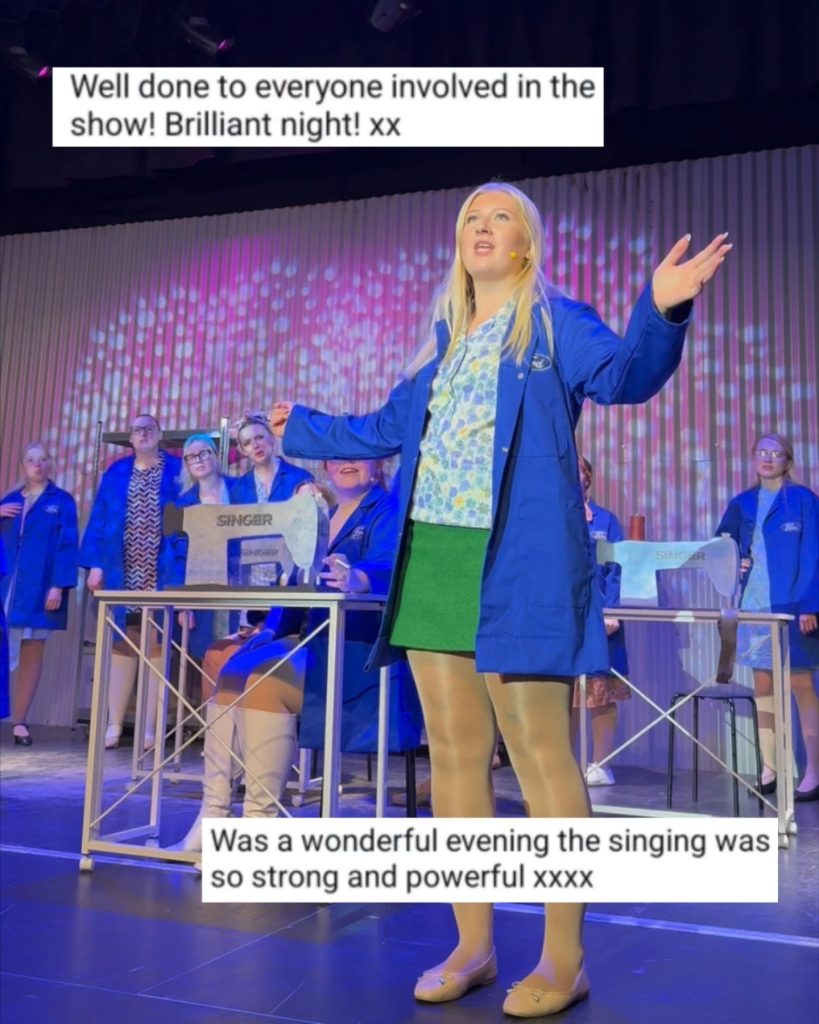
As soon as I was asked to be the Musical Director for this show, it woke up a deep, resonant chord within me. It inspired me to reflect on my own career, on moments of injustice and inequality that I have suffered, and, more importantly, that others I know have suffered. Sadly, what the ladies of Dagenham faced in the sixties, many women are still facing today. Our voices are not always heard; they are often marginalised and ignored.
I have nothing but the greatest respect and admiration for those people who stand up against the odds to speak their truth. But facing inequality, whether you are fighting for systemic change, battling for fairness in your industry, or standing up for yourself in your daily life, takes a toll on your wellbeing.
How do we fight for a cause without letting the battle break us?
1. The Cost of “Emotional Labor”
When you are fighting against inequality or standing up for what is right, you aren’t just spending time; you are spending emotional capital. Your nervous system is constantly navigating conflict, rejection, and the systemic “noise” that tells you your voice doesn’t matter.
- The Music Therapy Link: The Fortissimo Fatigue. In music, fortissimo means playing very loudly. You can blast a powerful, loud chord for a short moment to make a point, but if an orchestra plays fortissimo for an entire movement, the musicians become exhausted, the instruments strain, and the music loses its impact.
- The Practice: Recognize that advocacy requires intentional pianissimo (quiet) periods. You cannot stay in the battle 24/7. Your wellbeing requires dedicated “down-tempos” where the fight is parked at the door.
2. The Power of “Shared Resonance” (Your Dagenham Tribe)
The true magic of Made in Dagenham isn’t just that the women fought; it’s that they fought together. When one woman’s voice wavered, the others picked up the harmony. My second-favourite cue line in the show is: “You are not alone!” (If you read this far and want to know my actual favourite, you’ll have to drop me a line haha)
- The Support: When facing inequality, isolation is the enemy. You cannot carry the weight of a cause as a solo act. You need an Authentic Tribe—a community of people who meet you with Unconditional Positive Regard, where you can drop your armor and say, “I am tired.”
- The Integration: True collective wellbeing means allowing others to hold the line while you rest. Synchronizing your rhythm with others who share your values doesn’t just make the fight stronger; it keeps you safer.
3. Reclaiming Agency Through the “Vocal Anchor”
When the world tells you to stop, it tries to constrict your throat and diminish your presence. Standing up can cause your adrenaline to spike, leading to rapid, shallow breathing and a racing heart.
- The Exercise: The Anthem Breath. Before you step into a difficult conversation, a meeting, or a moment where you have to advocate for yourself:
- Place one hand on your belly and one hand on your chest.
- Inhale deeply for a count of 4, feeling your torso expand.
- On the exhale, let out a low, grounding, resonant hum for as long as you can.
- Why it works: This physical vibration stimulates your vagus nerve, sending a safety signal to your brain. It reminds your body that even when the external world is unfair, your Internal Haven is solid, portable, and entirely yours to command.
Your Advocate’s Wellbeing Toolkit:
- The Boundary Sunset: Set a time every evening where you stop reading the news, responding to emails, or debating the cause.
- The “Glimmer” of Joy: Intentionally seek out moments of pure, unadulterated joy that have nothing to do with the fight. A shared laugh, a beautiful piece of music, a walk in nature. Joy is an act of resistance.
- The “Dagenham” Principle: Look at the person next to you. How can you support their harmony today, and how can you let them support yours?
MOST IMPORTANTLY:
Try to find the space to embrace your own creativity, whatever your heart song is. Take five minutes to journal, paint, sing, or run around. Even a glimmer of this can help you reconnect through the overwhelm that feels out of your control.
Sharing these stories on stage is a beautiful gift, but the real work happens when the curtains come down. To anyone fighting a battle against inequality today: Remember that you cannot pour from an empty cup, and you cannot play on broken strings. Look after your instrument. Your voice is too important to let it burn out.
If you are interested in coming to see this incredible show, head to Saundersfoot Footlights web page for more information.


You May Also Like

Wellbeing Wednesday: The Under-16 Social Media Ban. Navigating the Shift from “Mars” Back to Earth

Wellbeing Wednesday: Reclaiming Your Voice. The Healing Power of Singing