
Wellbeing Wednesday: The Under-16 Social Media Ban. Navigating the Shift from “Mars” Back to Earth
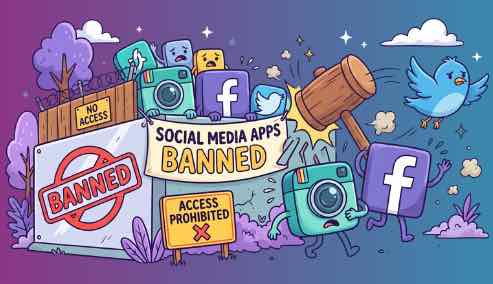
Welcome back to Wellbeing Wednesday. Today, we need to talk about a massive, historic shift that is currently happening across the UK, one that is causing an audible sigh of relief from some caregivers and a wave of panic from others. I’m talking about the UK’s new social media ban for under-16s.
If you’ve been reading this blog for a while, you’ll know how much a brilliant analogy from The Anxious Generation by Jonathan Haidt resonates with me. He compares the invention of the smartphone-led childhood to jettisoning our kids to Mars: unaccompanied, unexplored, and unprepared. For years, parents have been blamed for their teenagers’ online behavior, completely forgetting that we were the ones sent to Mars first, completely unguided ourselves!
I don’t know if this is anyone’s “fault” as such; this genie came out of the bottle and far exceeded what we all thought it would do. But now, we need, for our own and our children’s well-being, to take back control, which can be a very scary and daunting thought.
With this new legislation, the UK is finally trying to bring the next generation back down to Earth. From a clinical, music therapy, and developmental perspective, this is a monumental moment for maternal and adolescent wellbeing. I have seen and heard many opinions on the subject, and I am not here to judge nor condemn. What I would like to do is offer support through this transition and offer alternatives. If they work for you, brilliant.
So, what if your loved one is already on “Mars”? What if they already have multiple active accounts, and you are now tasked with managing the fallout of this massive digital boundary?
1. Why This Matters for Teen Wellbeing: Lowering the “Vigilance Frequency”
For a teenager, social media isn’t just an app; it’s a constant, high-frequency thrum of social feedback. Their developing nervous systems are exposed 24/7 to the algorithms of comparison, FOMO (Fear Of Missing Out), and quantified popularity (likes, views, follower counts).
- The Music Therapy Link: The Over-Amplified Feedback Loop. Imagine an electric guitar placed too close to its amplifier. It creates a piercing, painful screech of feedback that grows louder and more destructive the longer it sits there. Social media does the same to a teen’s brain. It keeps them in a state of “low-level vigilance”—subconsciously waiting for the next notification, even when they sleep.
- The Benefit of the Ban: By removing legal access to these apps, we are lowering the societal “noise floor.” It gives their brains a chance to step away from the feedback loop and settle into a healthier, more natural emotional rhythm.
2. Remind Your Loved One: This IS NOT a Ban on Connection
We know that social media can feel like a lifeline to some young people; it can feel like the only place where they can be seen and accepted. But what is important to remember here is that this is not a ban on communication. Mobile phones will still be allowed. You can still message, video call, email, text, and WhatsApp (so far, this isn’t included in the ban list). There are still infinite ways to communicate with your tribe; we just need to reframe our expectations of how this will happen.
3. The Great “Withdrawal”: Managing the Shift If They Already Have Accounts
If your child is under 16 and already has TikTok, Instagram, or Snapchat, this ban isn’t just a policy change; it’s going to feel like a cultural eviction. For a teenager, asking them to delete their accounts can feel like asking them to stop breathing. How do we navigate this transition without starting a household war?
- The “Shared Disappointment” Harmony: Don’t position yourself as the executioner. Frame it as a collective, nationwide shift. Validate their anger and sadness with Unconditional Positive Regard. You can say: “I know this feels incredibly unfair, and I know you’re going to miss your online spaces. It’s okay to be angry about it.”
- The “Lead by Example” Solo: This is our golden opportunity as parents to look at our own usage. If we are telling our under-16s they can’t be on apps while we are glued to our own doom-scroll at the dinner table, the harmony is broken. Let them see you putting boundaries on your own tech.
- The “Grown-Up” Alternative: If they lose their social media, replace it with something tangible. Upgrade their “Acoustic Environment.” Work together to find a creative hobby, a sports club, or, as I talked about last week, a creative passion like music, drama, or art. We have to give them something to run toward, not just something taken away.
4. Reclaiming “Real-Life Resonance”
Historically, human connection was built on Synchrony—singing together, playing games, sitting face-to-face, and reading body language. Social media offers a filtered, artificial version of connection that strips away all the raw, beautiful reality of human interaction.
- The Strategy: The Shared House Pulse. Use this legislative shift to reset your home’s Safe Haven. Re-introduce the “Charging Station” in the kitchen where all devices go to sleep at night. Dedicate phone-free zones for family meals where you can practice active, present listening.
- The Goal: To help our children realize that their internal song is worth hearing based on who they are in the real world, not how many likes they get from strangers on a screen.
Your Tech Shift Toolkit:
- The “It’s the Law” Reframe: Use the policy as your shield. It takes the pressure off you being the “bad guy” and places it on a collective health decision.
- The Creative Bridge: Re-introduce non-connected audio devices (like older MP3 players or CD players) if they used social media apps for background music or sleep sounds.
- The “Real-World” Glimmer: Actively schedule face-to-face time with their friends (sleepovers, movie nights, or trips out) to replace the digital connection they are losing.
This transition isn’t going to be easy. There will be slamming doors, eye-rolls, and a lot of emotional static. But remember: drawing a line at the digital border is a brave act of love. We are bringing our kids back from Mars, and we are helping them find their footing on solid, authentic ground.


You May Also Like
Wellbeing Wednesday: Taking Off the “Superwoman” Cape
Wellbeing Wednesday: The Unplugged Gig – Why Self-Care Is Non-Negotiable for Freelance Performers